
Multifactor Authentication With edu-ID
You can now enable and configure two-factor authentication for your SWITCH edu-ID account.
Central IT services are progressively activating multifactor authentication (or MFA, strong authentication, or two-factor authentication) for various services to increase the security level of our applications (more info on our blog, in French). In addition to your password, you will be asked for either:
-
A one-time code generated in an application designed for this purpose, called TOTP (such as Google Authenticator),
-
To validate an authentication request without a password using Passkey technology
-
(or received via SMS, but this is not recommended for reliability reasons). (SMS will no longer be accepted as a 2nd factor token in 2026)
The edu-ID identity includes the use of multifactor authentication, and its activation is easy. To read the official SWITCH documentation on MFA and edu-ID, visit the following page: https://help.switch.ch/fr/eduid/docs/services/login/two-step-login/
Activation
(adapted from the official SWITCH documentation)
To enable two-step login, go to your SWITCH edu-ID account at https://eduid.ch and click on the Security tab, and then click the On button next to Multifactor Authentication,
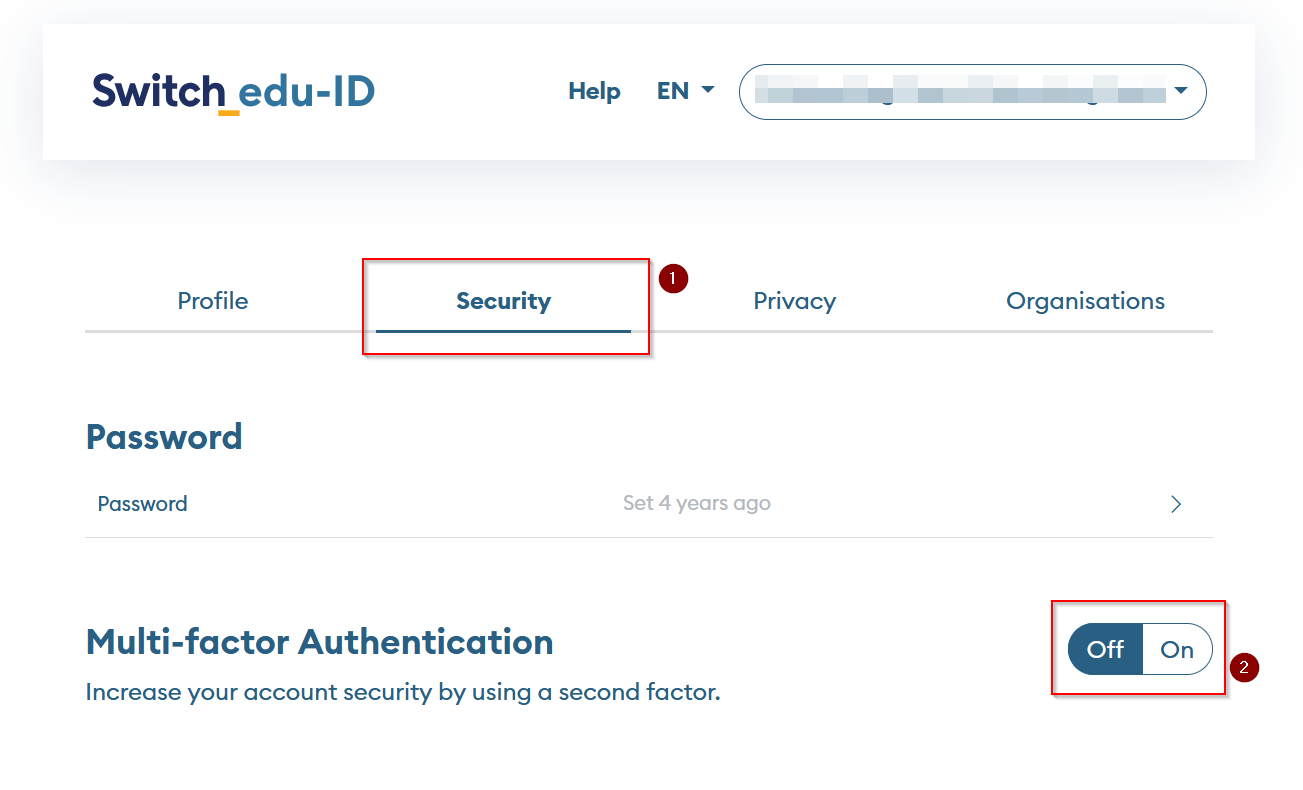
or go directly to the two-step login settings (https://eduid.ch/mfa/initial).
Next, activate one of the two-step authentication methods. We recommend using a mobile authenticator app to obtain your codes.
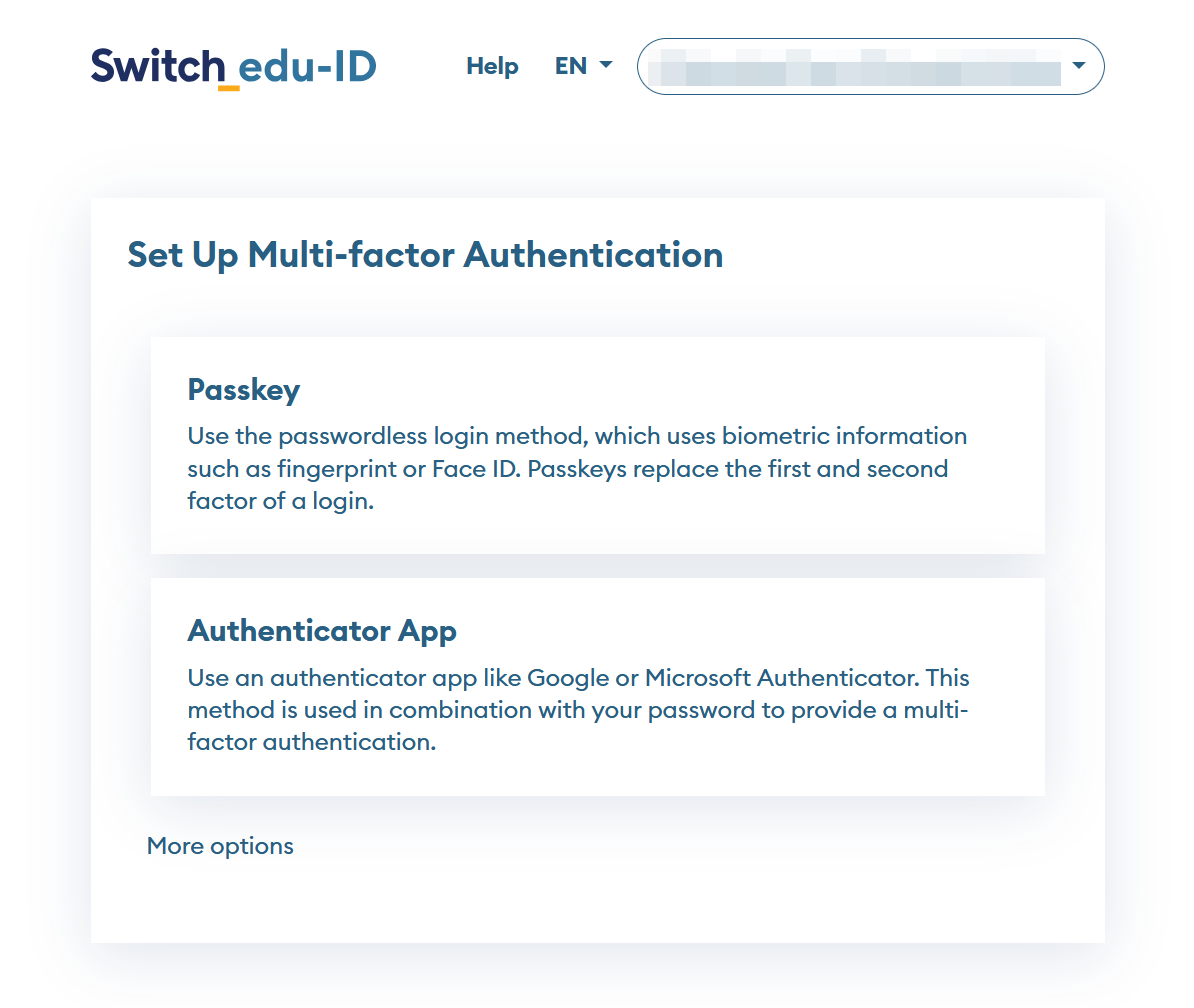
Authenticator app
You will first be asked for a mobile phone number in case you need to recover your account:

Next, you need to register your secret key, which will be used to generate the codes:
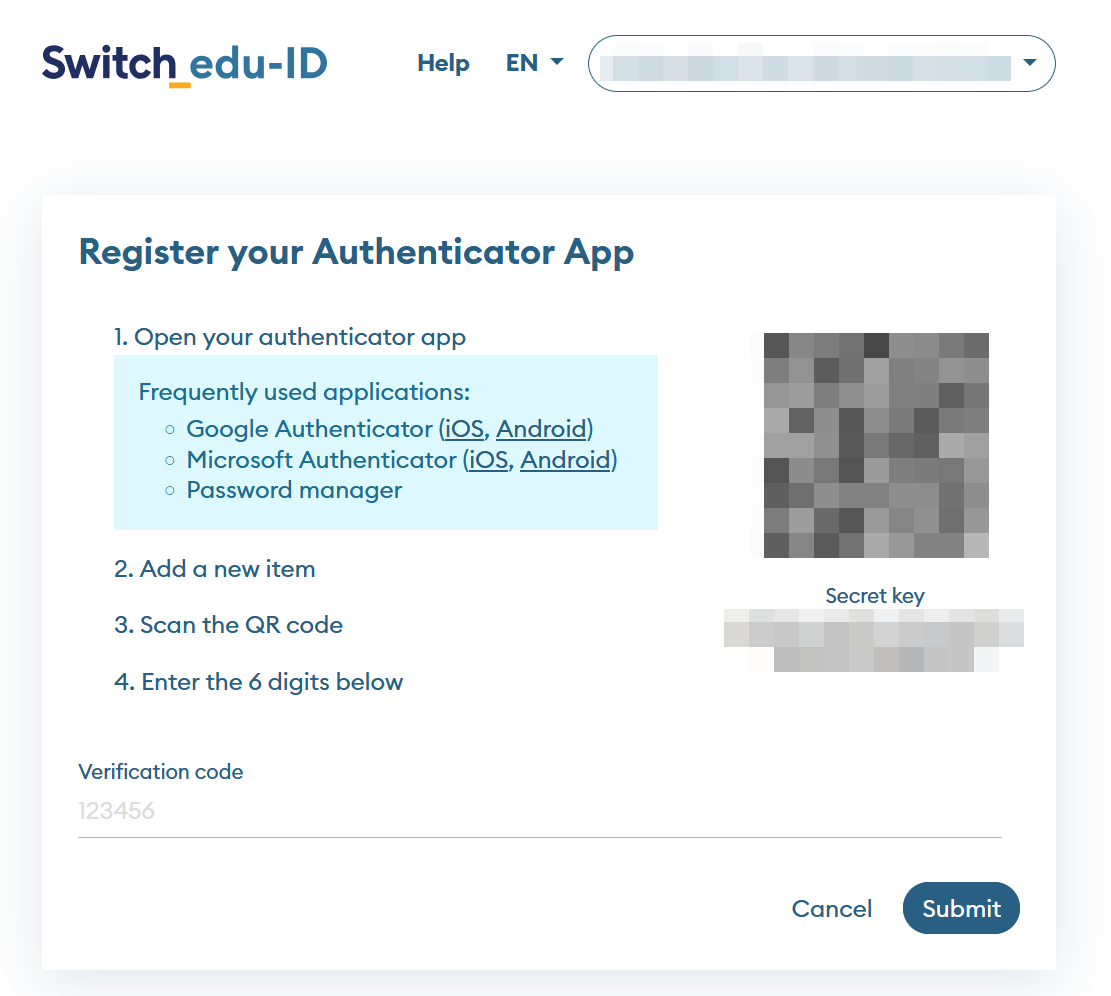
The following mobile apps, among others, work: Ente Auth, Twilio Authy, FreeOTP, Google Authenticator, Microsoft Authenticator, BitWarden Authenticator, and OTP Auth. (Other applications that support the TOTP standard can also be used.) More information on iBarry.ch. The Ente Auth application and the 2FAS browser extension can be used without a mobile phone.
Most of the authenticator apps mentioned above work with multiple account providers too, such as Google, Facebook, etc.
More and more password managers offer the ability to manage both your passwords as well as the 2nd factor within a single app, such as macOS Keychain (latest version) or BitWarden (premium version). ). This also has the advantage of being synchronised across different devices.
Don't forget to take note of your recovery code and save it.
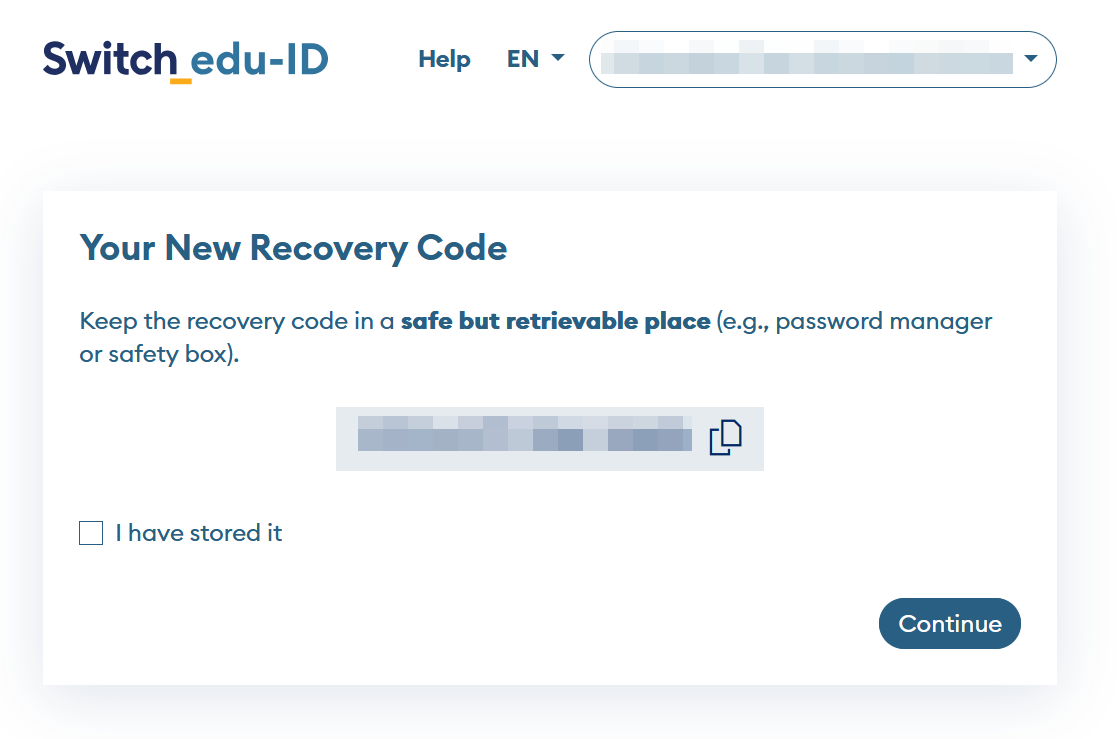
Passkey
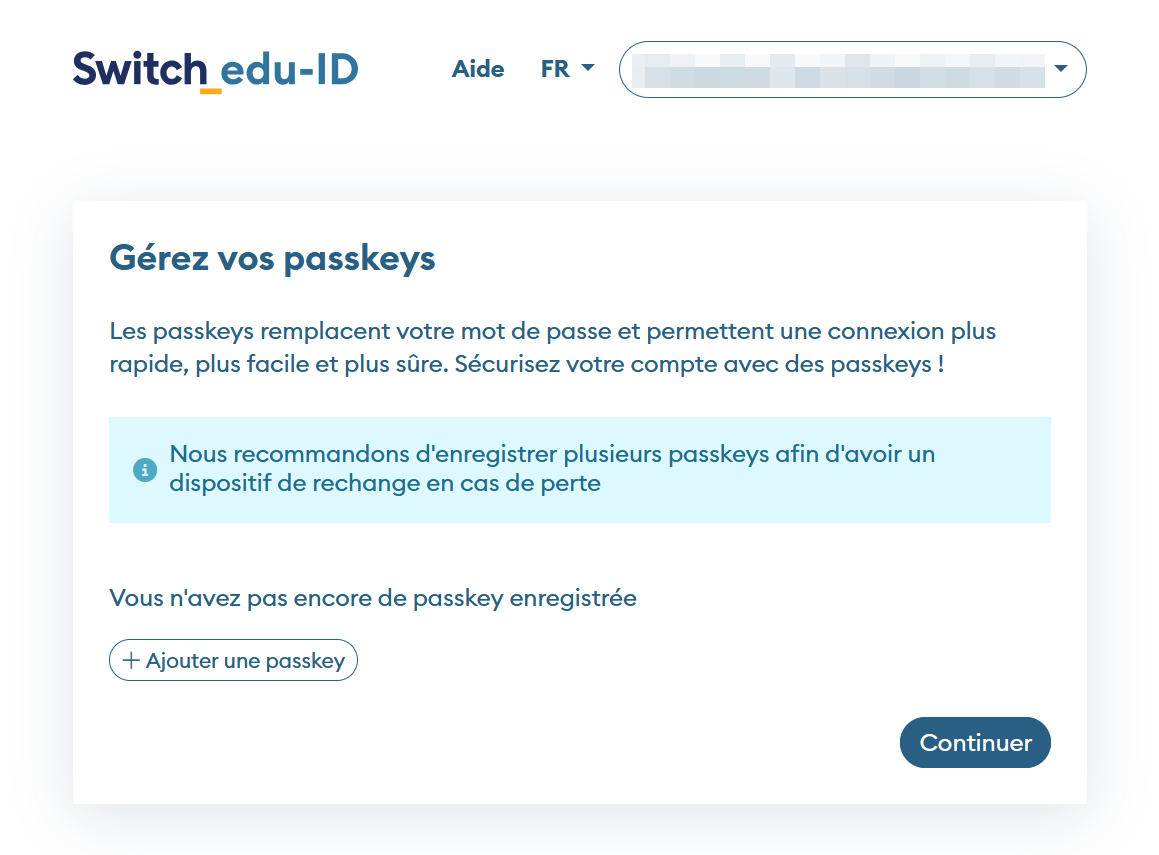
A new authentication technology called Passkey can be configured. This enables you to login securely and without a password. You can find more information here: https://help.switch.ch/eduid/docs/services/login/auth/passkey/
You will probably need to configure a Passkey for every platform and browser you use, unless using a synchronised password manager on all your devices.
SMS
Starting in 2026, SMS will no longer be useable as a 2nd factor at UNIL. You configure an Authenticator app or use Passkeys.
The other option, which we do not recommend for reasons of reliability and will be gradually retired, is to use SMS. A code will be sent to you for each connection requiring a 2nd factor.
If you use a non-Swiss phone number, please be aware that certain countries and operators may limit the delivery of SMS messages, or charge for them. In this case, we recommend you use an authenticator app rather than the SMS option.
It is possible to enable more than one login method and multiple Passkeys.
Disabling MFA
If you deactivate MFA, you risk losing access to certain resources or services which require MFA. You will have to restart the processus if you reactivate it later.
To disable two-step authentication, go back to the Security tab and click the Off button next to the Multifactor Authentication option (https://eduid.ch/account/security).
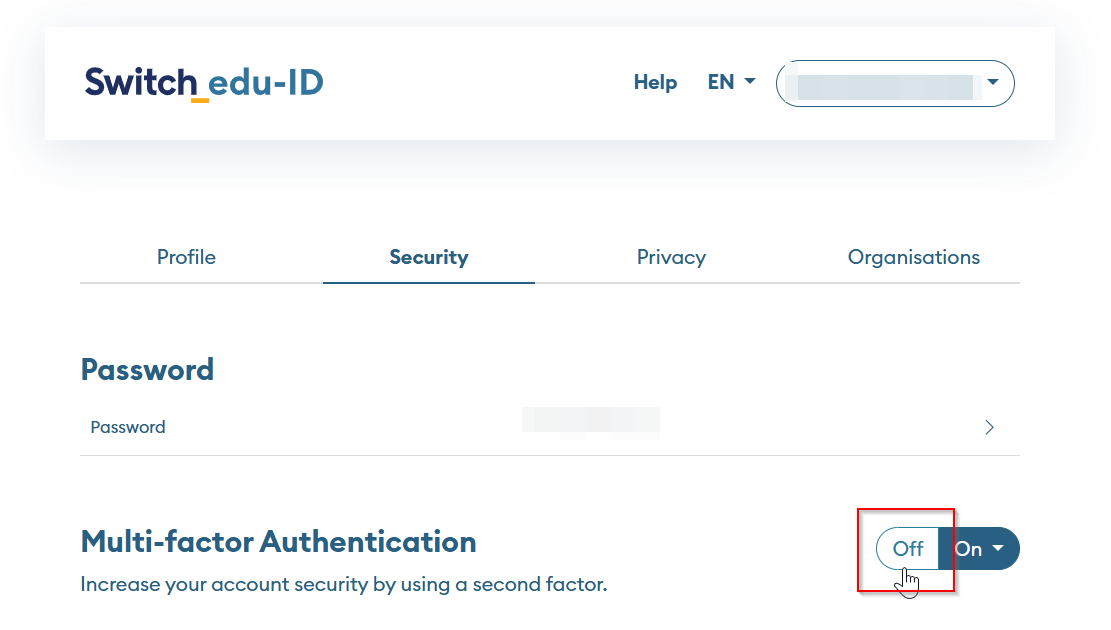
Please note that this may mean that you need to reinitialise or reverify the verification code if you reactivate a certain method later on.
Login
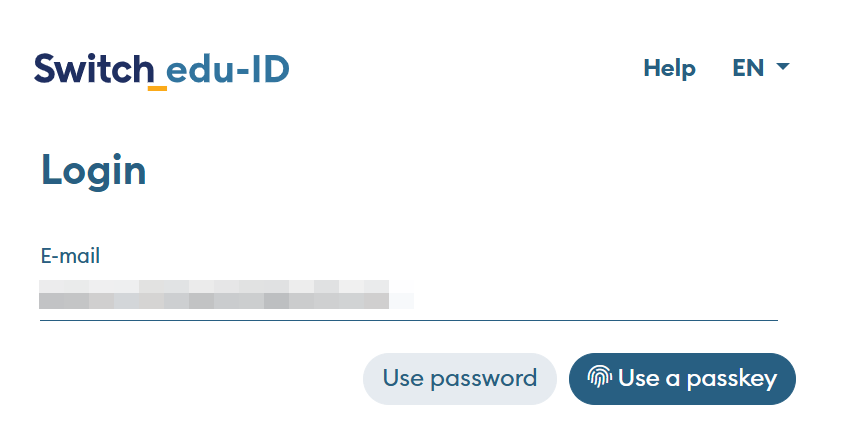
When you log in to a page requiring a second factor, after entering your email address, depending on your MFA configuration, you will need to either enter a password or proceed via a Passkey:
TOTP
If you choose the password, enter it
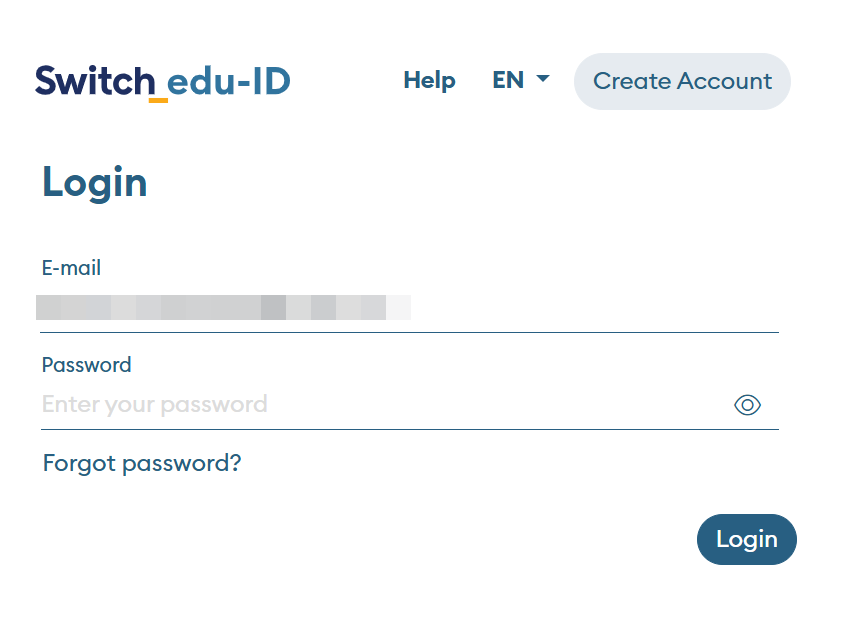
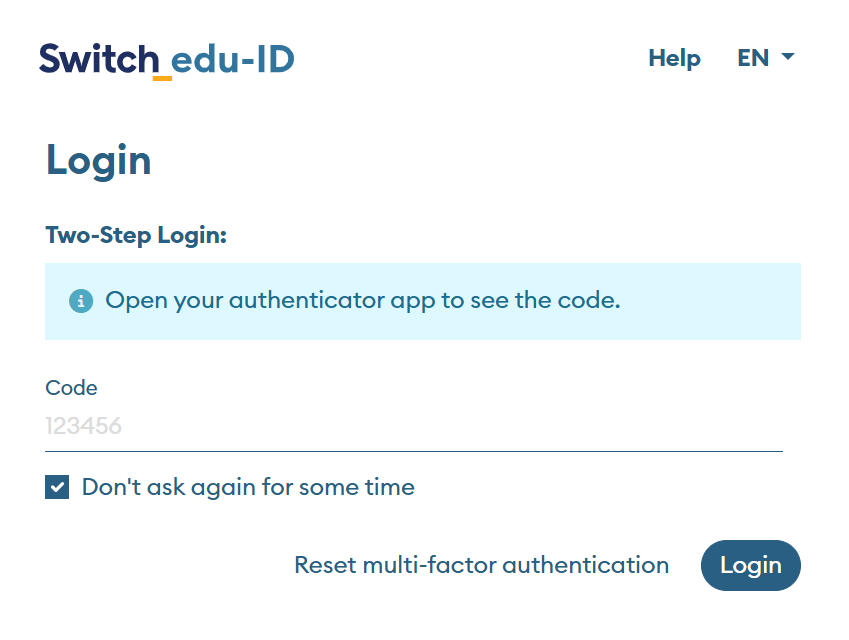
then enter the TOTP code generated in the app you previously configured
Passkey
Passkey, or access key, is a new emerging standard, supported by major internet players, and is expected to be THE secure authentication solution in the future. Edu-ID is now Passkey compatible. Once configured, it allows for "passwordless" authentication, without needing to enter your password. You can find an interesting article on Passkeys here: https://www.ibarry.ch/en/safe-devices/passkeys/
The technology is still new, and there are multiple ways to configure Passkeys. Not all OS, apps, or devices are compatible. You can find more information in the Switch FAQ.
It is configured per device! So, you will need to configure a Passkey for your laptop, one for your mobile phone, etc. Alternatively, you can use a password manager, such as BitWarden, and then the Passkey can be used on multiple devices.
Please report any problems or incompatibility encountered during Passkey configuration or use to the helpdesk.
Questions / Problems
You will find the answers to multiple questions concerning multi-factor authentication on the official SWITCH edu-ID website: https://eduid.ch/help?lang=en#two-step-login-accordion